


Coaching Tip: Shadow Practice for Strokes and Footwork

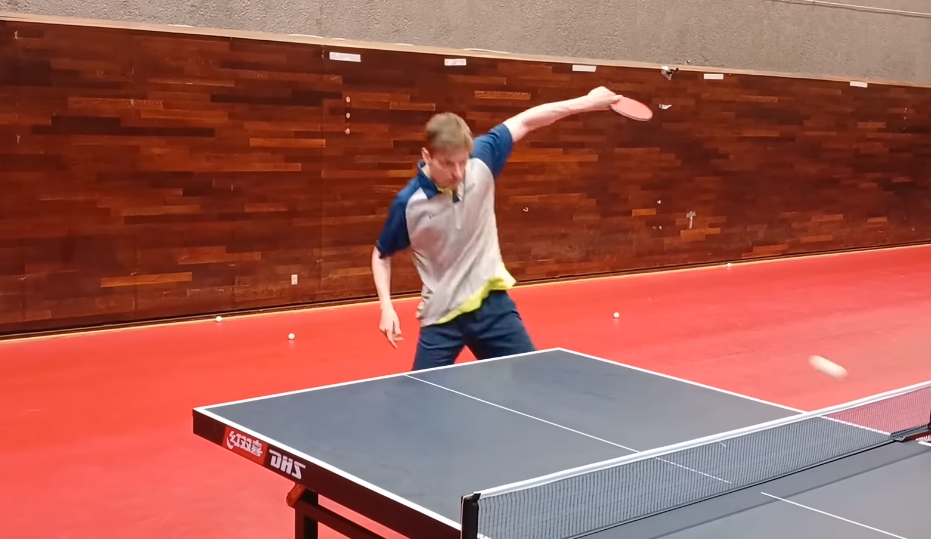
A great way to improve the sharpness and steadiness of your shots is to shadow practice them. This means practicing your shots without the ball. One of the best things that ever happened to me when I was a beginner was when I was told to shadow practice my forehand and backhand drives and loops, and side-to-side footwork, one hundred times a day. This was a primary reason why I went from beginner at age 16 to 1900+ in about two years.

Coaching Tip: Staying Low

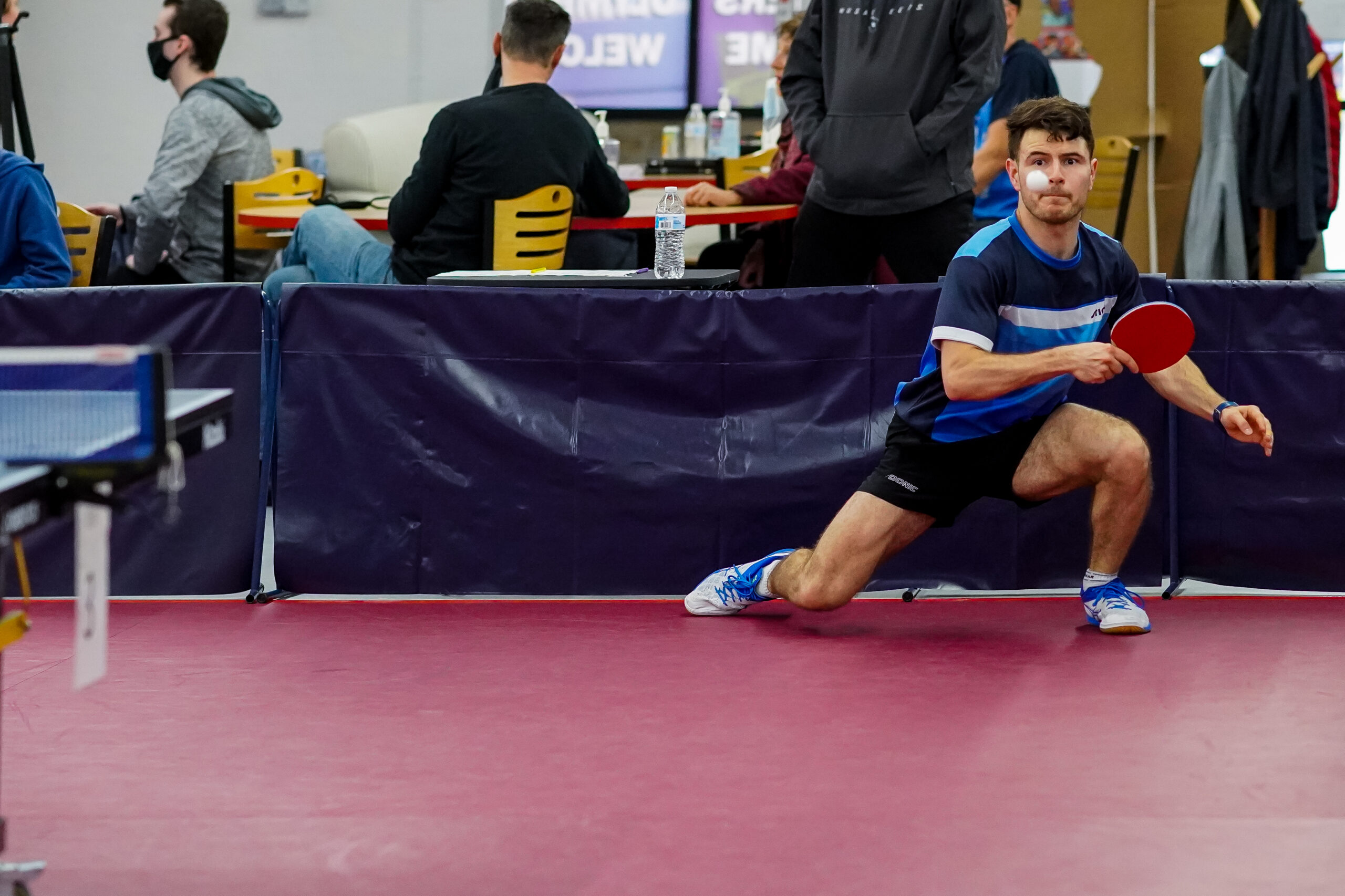
One of the biggest problems beginning/intermediate players have is standing up too straight. Watch the top players and you’ll see how they stay low – feet relatively wide and pointing slightly outward, weight toward the front inside balls of their feet, knees bent, and leaning slightly forward from the waist. This allows much stronger play than standing up straight – you’ll move quicker, have better balance, recovery more quickly after shots, and your shots will be more natural and more powerful. And you’ll even feel more like an athlete because you’ll be playing like one!

Coaching Tip: Five Steps to a Great Spin Serve

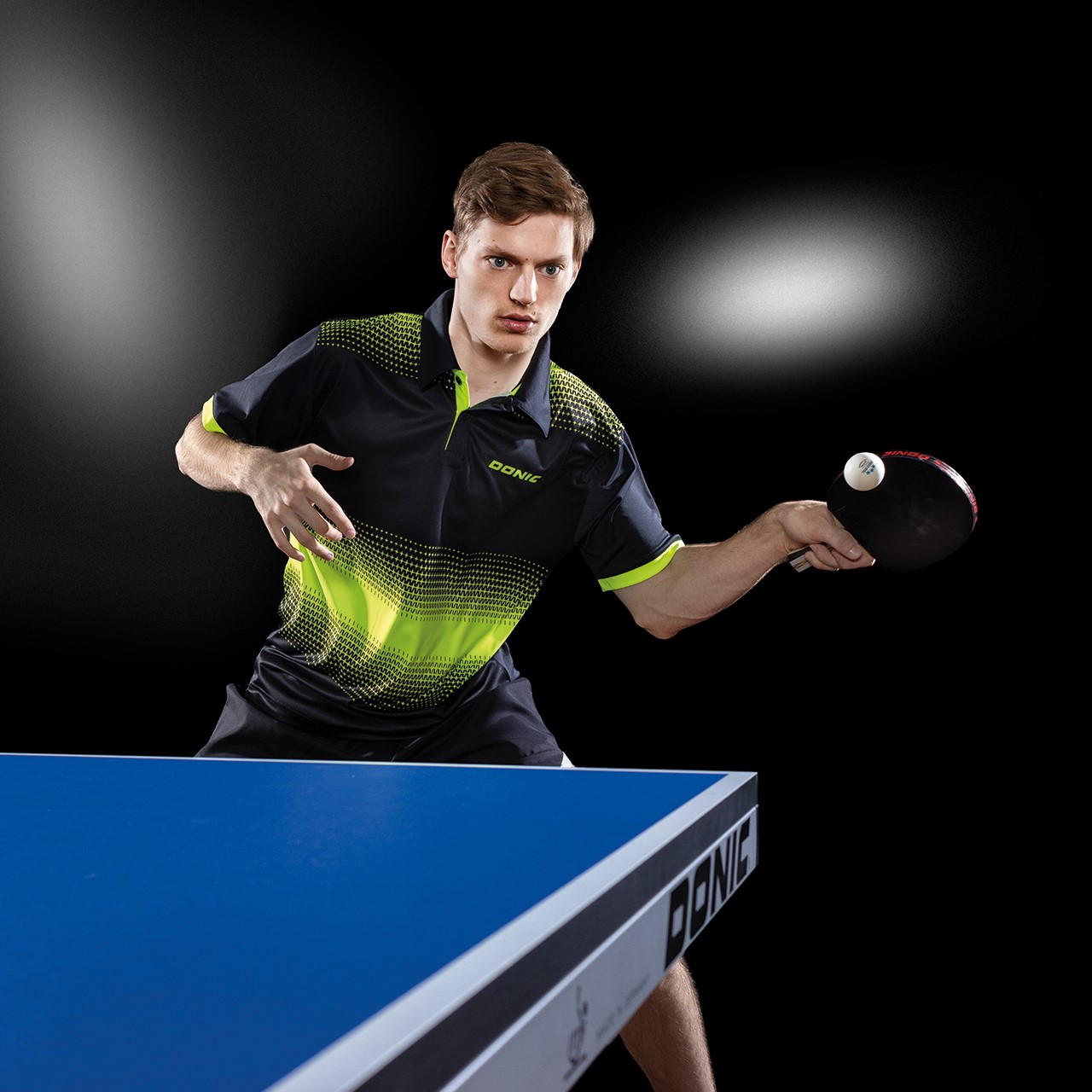
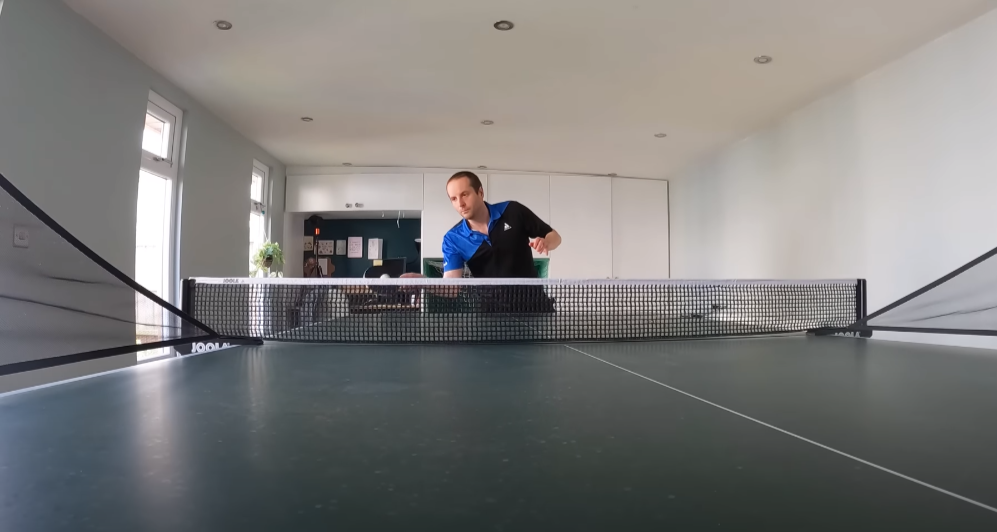
There are five steps, roughly in this order. Serving takes practice, often alone with a box of balls as you serve, over and over. Take your time; don’t rapid-fire serve. Visualize what you want to do with each serve as you practice, and then try to match what you visualize. You might want to get a coach to help at the start, or watch what top players do, and perhaps get their help. Learn to follow your serve with an attack – often it’s the threat of the follow-up shot that makes the serve effective as opponents try to be too perfect with their returns. (Have a question about spin? Here’s my article Everything You Ever Wanted to Know About Spin – But Were Afraid to Ask!)

Coaching Tip: What to Do at the End of a Close Game

You know the problem: you’re playing well, you’re battling with stronger players, and every game is close – but you can’t quite win. Far too often you lose those close ones and have nothing to show for your great play but another “what if…” – and hopefully, just maybe, a little more experience so you’ll do better next time. So how does one close out a match?

Coaching Tip: Tools and Tactics for the Physically Challenged

Table Tennis is an Olympic Sport, and at the highest levels, is played by some of the best athletes on the planet. Even at levels below world class it is dominated by great physical athletes who can race about the court ripping shot after shot. But we’re not all great physical athletes, and we’re not about to give up against an opponent just because he can race around the court ripping shot after shot, and we can’t, are we? So how can one compete with an opponent who is faster, stronger, and more athletic? Or against a kid who might not be bigger and stronger, but who can seemingly rally at ten times your pace?

Coaching Tip: Beat Unorthodox Players with Fundamentals

How often have you played somebody with, for lack of a better word, weird shots? Perhaps they hit shots with a floppy wrist (so you could never tell where the shot was going), or with sidespin on shots that normally don’t have sidespin, or perhaps they just used a non-inverted surface that you weren’t used to seeing. There are infinite possibilities. The problem was that you found these “weird” shots difficult to play against with your more fundamental game. Why does one with sounder fundamentals have problems with weirder games, and how can you overcome that?

Coaching Tip: How to Create a Truly Heavy Backspin Serve

Before we start, here are two videos to watch. Here’s a video (1:18) of a Ma Lin of China (shirtless) demonstrating his “ghost serve,” where his high-toss serves almost slam backwards into the net due to the extreme backspin. Note how open his racket is. He’s not only contacting the bottom of the ball, he’s contacting it slightly toward the front with an extremely open racket, with the front slightly higher than the back, and essentially scooping the ball up. (More on this below.) Here’s another video (1:21) that shows more clearly how to do this ghost serve, with a lower toss (and so the contact is more under the ball rather than slightly in front). How are these two able to create so much backspin?

2013 US Open Table Tennis Championships in Las Vegas: July 2-6

USA Table TennisThe 2013 US Open Table Tennis Championships takes place in Las Vegas July 2-6. The entry form is available when you click on this article. Over 75 events will be held at the spacious Las Vegas Convention Center, including Singles, Doubles, Para, Hardbat, and other Specialty Events. The Las Vegas Hotel and Casino is offering special pricing for attendees, and is conveniently located next to the Convention Center: no driving necessary! First deadline is May 11th, and late entry deadline is May 18th, so don’t delay!

Coaching Tip: The Decline of the High-Toss Serve and Why You Should Learn It

The high-toss serve used to be one of the most popular serves at high-level table tennis, and pretty common at the intermediate level as well. There are still plenty of players who use it, but it is not as common as before. Why is this? But first, you should understand what the serve is, and its advantages and disadvantages.

Lily Zhang Wins Women’s ITTF-North American Cup Title

Lily Zhang US Nat 2012 ALily Zhang won the 2013, ITTF-North American Cup in Westchester NY. Her ICC/STIGA Team mate, Timothy Wang was runner-up to Andre Ho from Canada. Both Lily and Timothy continue to show consistent winning results in major events. Credit goes to these two talented players and their dedication to training, as-well-as to their coaches and to the tremendous support they all receive from the ICC/STIGA Elite Team.